
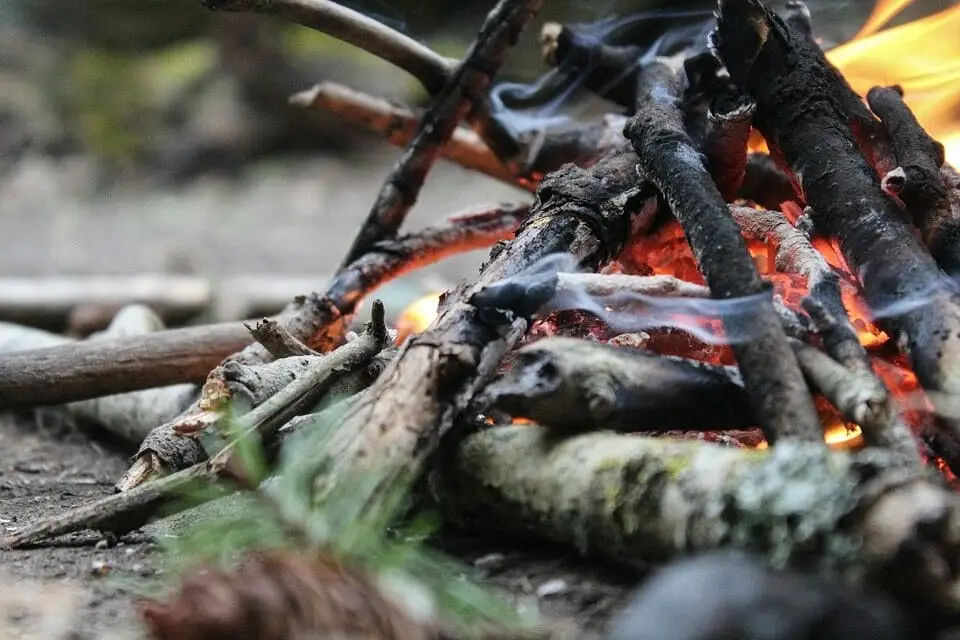
Rain can make it difficult to start a campfire, but sheltering a fire under trees or a tarp is not the answer. Begin by deciding whether conditions allow a safe fire at all. During storms, high winds or conditions that prevent safe supervision, postpone it.
Keep the Fire Out From Under Cover
Use an approved outdoor fire location with open space above it. Do not build a fire beneath a dense tree canopy, low branches, a tent, a tarp or a covered porch. Rain protection for people and equipment should remain separate from the fire.
Check the campsite rules and current fire restrictions. Rain does not automatically cancel a burn ban or make every location suitable for a fire.
Use an Approved Fire Ring or Fire Pit
At a campsite, use its designated fire ring where fires are permitted. For a portable fire pit, follow the model’s placement and operating instructions. A raised bowl does not provide permission to burn under cover or on a combustible surface.
Bring Dry, Seasoned Firewood
The best preparation is a supply of dry, seasoned firewood and dry kindling. Protect stored wood from rain while allowing airflow. Keep the wood supply away from the fire and bring over only what you need.
Stripping bark from a wet log does not prove the wood inside is dry. Do not rely on a larger fire to make unsuitable fuel burn. If you do not have dry fuel, wait for better conditions.
Start Small With Dry Kindling
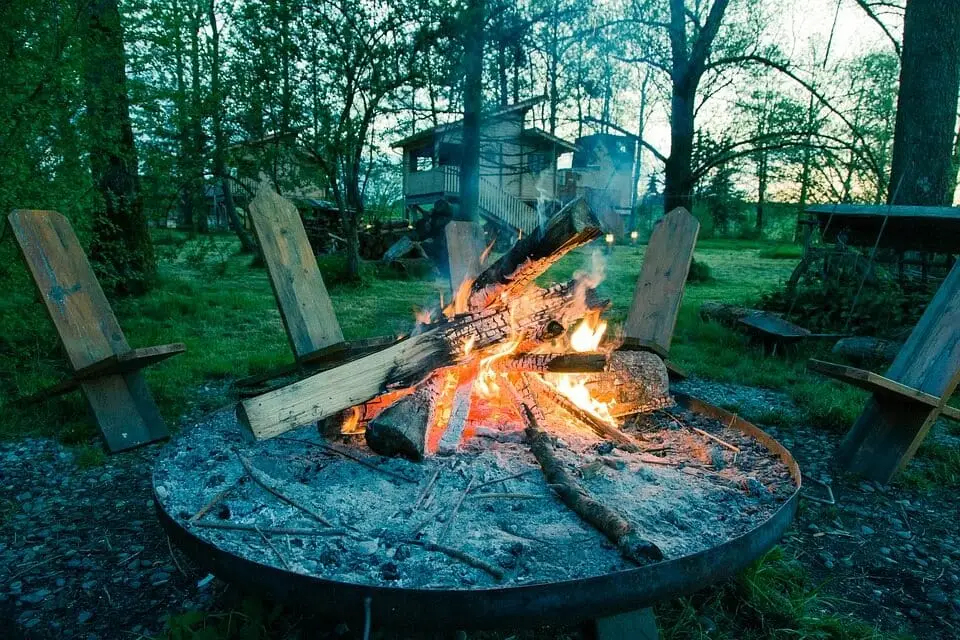
Use dry tinder and small kindling, arranged with room for airflow, then add suitable firewood gradually. Keep the fire within the size allowed by the fire pit or campsite. Never add gasoline, lighter fluid or another flammable liquid to start or revive it.
Avoid Excess Smoke
Wet wood produces more smoke than dry firewood. Move away from smoke and stop burning if it is affecting your group or neighbors. A change in wind direction can move smoke back toward people, so sitting upwind is not a guarantee of protection.
Plan How You Will Put the Fire Out
Have enough water and suitable tools for a campsite fire, or the extinguishing equipment and shutdown procedure specified for your fire pit. Stay until the fire and embers are fully extinguished and cool. Do not assume rain will finish the job after you leave.
Safety reference: EPA: Backyard Recreational Fires (archived Burn Wise guidance). Follow your manufacturer’s instructions and applicable local requirements.
If you have any questions regarding how an S&S Fire Pit can enhance your outdoor living space; We can help. https://ssfirepits.sbs/contact/
