
Controlling smoke from fire pits can enhance your outdoor experience and improve safety.
At S&S Fire Pits, we know the importance of a clear, enjoyable gathering space. In this guide, we’ll explore causes of smoke and share practical tips to reduce it.
Let’s dive into the essentials of smoke control.
What Causes Smoke in Fire Pits?
Understanding smoke production in fire pits can help you minimize it and enjoy cleaner air during your gatherings. Let’s look at the main factors influencing smoke levels.
Types of Wood Matter
Dryness, log size, and airflow all affect how a fire burns. Dense hardwoods such as oak, hickory, and maple are useful fuel choices, but the species name alone does not guarantee a low-smoke fire. Wet wood can smoke regardless of species.
Environmental Factors
Environmental conditions also play a crucial role. Wind direction and speed can influence how smoke disperses. If the wind is blowing towards your seating area, you’ll end up surrounded by smoke. It’s best to place your fire pit in an area where wind patterns can be considered, or adjust seating based on current wind conditions. Avoid burning in windy conditions that could spread sparks, and follow local restrictions.
Moisture’s Role
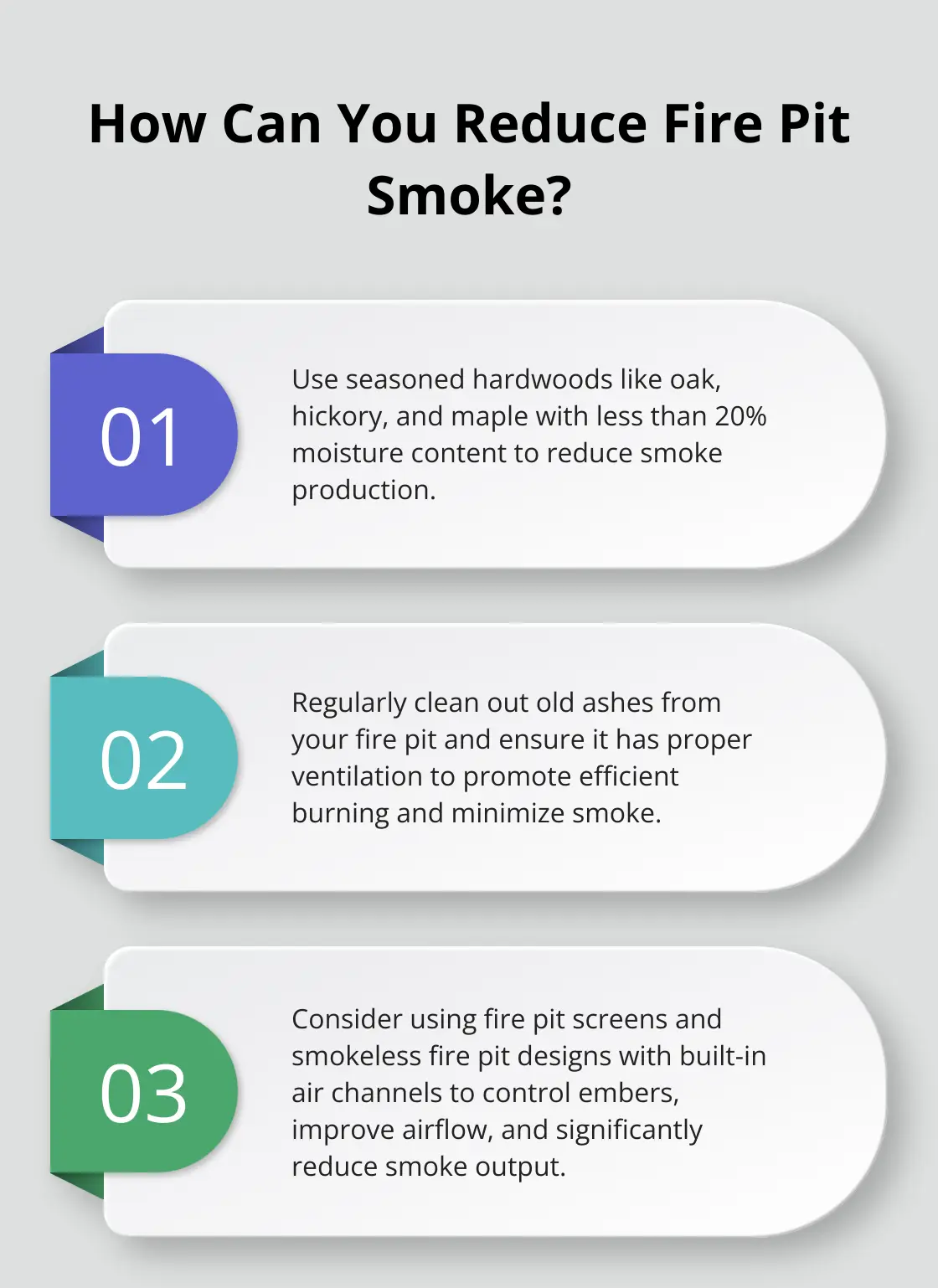
Use dry, seasoned firewood. The EPA wood-burning guide recommends wood with a moisture content below 20 percent. A moisture meter is more useful than judging dryness by appearance alone. Store firewood off the ground with the top protected from rain and the sides open to airflow.
The following steps can reduce smoke, but they do not make a wood fire smoke-free.

How to Reduce Smoke
Choosing the Right Wood
Choose dry, untreated firewood and use smaller pieces of dry kindling to get the fire established. Do not burn painted or pressure-treated lumber, trash, or wet and moldy wood. Never use gasoline or other flammable liquids to start or strengthen a fire.
Proper Fire Pit Maintenance
Remove ash only after the fire and embers are completely extinguished and cold. Arrange logs with space for air to circulate and avoid packing the bowl so tightly that the fire smolders. Follow the S&S care instructions; do not drill extra ventilation holes into the bowl.
What Screens and Smokeless Designs Actually Do
A spark screen helps contain escaping sparks. It does not filter smoke or turn an open fire pit into a smokeless design. Some fire pits use secondary-combustion features to reduce visible smoke under suitable conditions, but reduced smoke does not mean no smoke or no emissions. S&S carbon-steel bowls should not be described as double-wall smokeless fire pits.
For an open-bowl fire, focus on dry fuel, a manageable fire, and sensible log spacing rather than an accessory that promises to eliminate smoke.

How to Enhance Health and Safety
Health Risks Associated with Smoke Exposure
Wood smoke contains fine particles and gases. The EPA explains the health risks of wood smoke, including irritation and worsening asthma symptoms. Limit exposure, especially around children and people with heart or lung conditions. Less visible smoke is not proof of clean air.
Safe Distances for Seating Arrangements
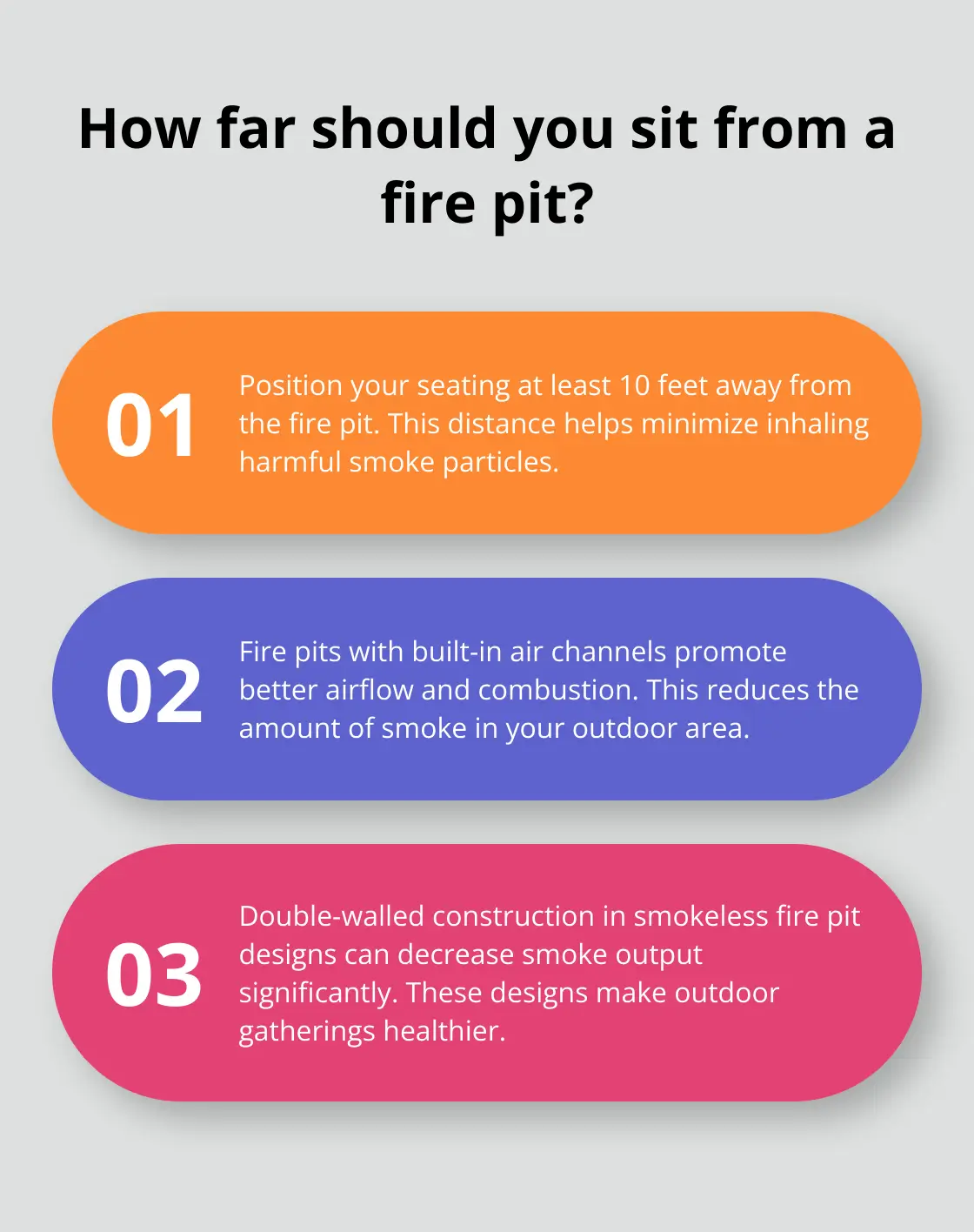
Follow the fire pit instructions and local fire rules for clearances from people, structures, vegetation, and other combustibles. Move away from smoke rather than relying on a fixed seating distance to make exposure safe. If smoke repeatedly blows toward people or neighboring homes, stop the fire safely.
Implementing Ventilation Solutions
Use the fire pit outdoors in an open location that meets the required clearances. Do not use it in a garage, tent, or enclosed patio. Do not aim a fan at the fire as a smoke-control fix; it can disturb embers. Check local burn restrictions and air-quality conditions before lighting a fire.
Conclusion
Effectively controlling smoke from your fire pit can drastically enhance your outdoor gatherings. By choosing dry wood, following the care instructions, and keeping the fire manageable, you can reduce avoidable smoke. Hardwoods like oak and maple, along with proper fire pit design, play substantial roles in reducing smoke.
Health and safety should never be overlooked. Ensuring proper ventilation, maintaining safe distances for seating, and being aware of potential health risks associated with smoke exposure are crucial steps. Reducing smoke not only improves air quality but also protects the well-being of your guests.
Applying these best practices can make all the difference in your fire pit experience. For those looking to elevate their outdoor living space, we at S&S Fire Pits offer handmade, unique fire pits all built from solid USA steel. Each product is designed to last a lifetime S&S Fire Pits. Choose a pit for its construction and suitability for your space, and use dry fuel and good fire-building practices to manage smoke.
Aim for less smoke, stay out of the plume, and remember that every wood fire requires attention and appropriate precautions.
